
Sleep Cycles And Covering Cages For Sleep
In the wild, birds wake and sleep with the rise and fall of the sun, they have their routines in between these times and it ensures optimum health for their survival in the wild, against disease, internal recovery of any damages sustained through fights, predatory attacks, or illness.
In captivity, this can work for some birds too depending on their setups and if they have access to somewhere that isn’t a human household with demands keeping them often up way past sunset! so, what can we do in a situation where natural sleep cycles aren’t an option?
Coverings! there are magical covers these days in the way of blackout covers! it blocks practically all light and reduces visual stimuli, perfect when combined with sound-reducing items to allow a bird to rest deeply. Why is resting deeply important to a bird? well, for one, resting deeply allows the body to completely shut down and in doing so the body can repair internal damage to tissue, organs, and muscles, particularly good in a rehab case where the bird is sick. darkness reduces cortisol in the body, which is why black-out therapy can often be the first defense against cardiac arrest, especially in wild birds, where 90% of human interaction kills these birds through shock!
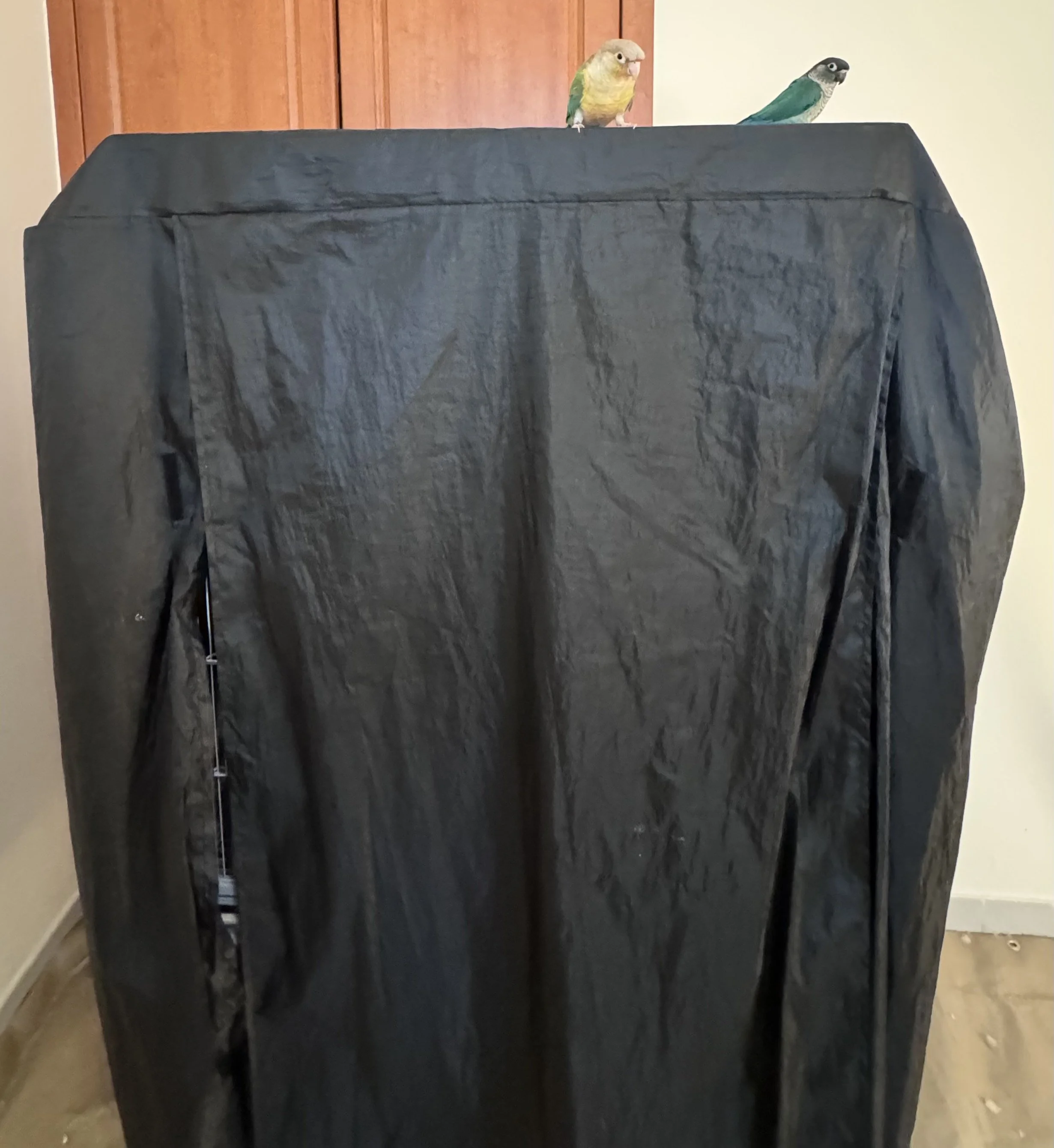
Also on the market now are blackout blinds, curtains and window covers too. These are good options when cage covers may not be suitable for a bird, for example, one that is hormonal, where a cover may stimulate unwanted behaviours by triggering that reproductive hormone, in the way of dark nesting corners or shredding of covers to use as nesting substrate, its best to avoid covers in this instance and focus on correct diet and redirecting the behaviour!
How long does your bird need to sleep? typically 10-12 hours a night, away from stimuli, and a TV on in the background will keep your bird stimulated and expending energy, for example African Grey parrots utilise calcium rapidly when expending energy by being awake, just one of the reasons sleep and diet are key to healthy birds and why visual and auditory stimuli must be removed, to avoid health implications and unwanted behaviours such as aggression, plucking, screaming and much more.
In my experience, cage covering dramatically lowers cortisol in birds and aids calmness and rest, I have used them with every single patient intake for the first 24 hours, and it is top of my list on emergency avian care and rehab. I use blackout curtains, blinds and covers for the 8 full-time residents here at Hello, Goose! My very first parrot would say “Shhh be quiet! I am sleepy” if I was keeping him up too late, all the parrots here tell me when they would like to go to bed, some choose to go earlier and simply have wind down time before lights out, some choose to have a more gentle start in the mornings, by choosing to wake up slowly in the flight room rather than interact with myself or the others over breakfast.